00 Context
Design for a Outpatient Healthcare Environment
Patient rooms are critical spaces for residents, especially in long-term care facilities. The increased desire for a sense of home and privacy, as well as the social well-being of patients, calls for a more customized design solution to the space. Since healthcare projects usually require a large amount of capital investment, rigorous planning and regulation compliance, and long project span, mock-ups during early design stages have become an essential part of healthcare projects. They not only minimize the risk and cost but also allow future users, medical staff, and owners to experience and examine the space during the process. Moreover, mock-ups provide a great opportunity for designers to have a more intimate conversation with other core groups in the project team. While mock-ups are usually designed and constructed by contractors, designers benefit from strategic planning and fabricating mock-ups in house.
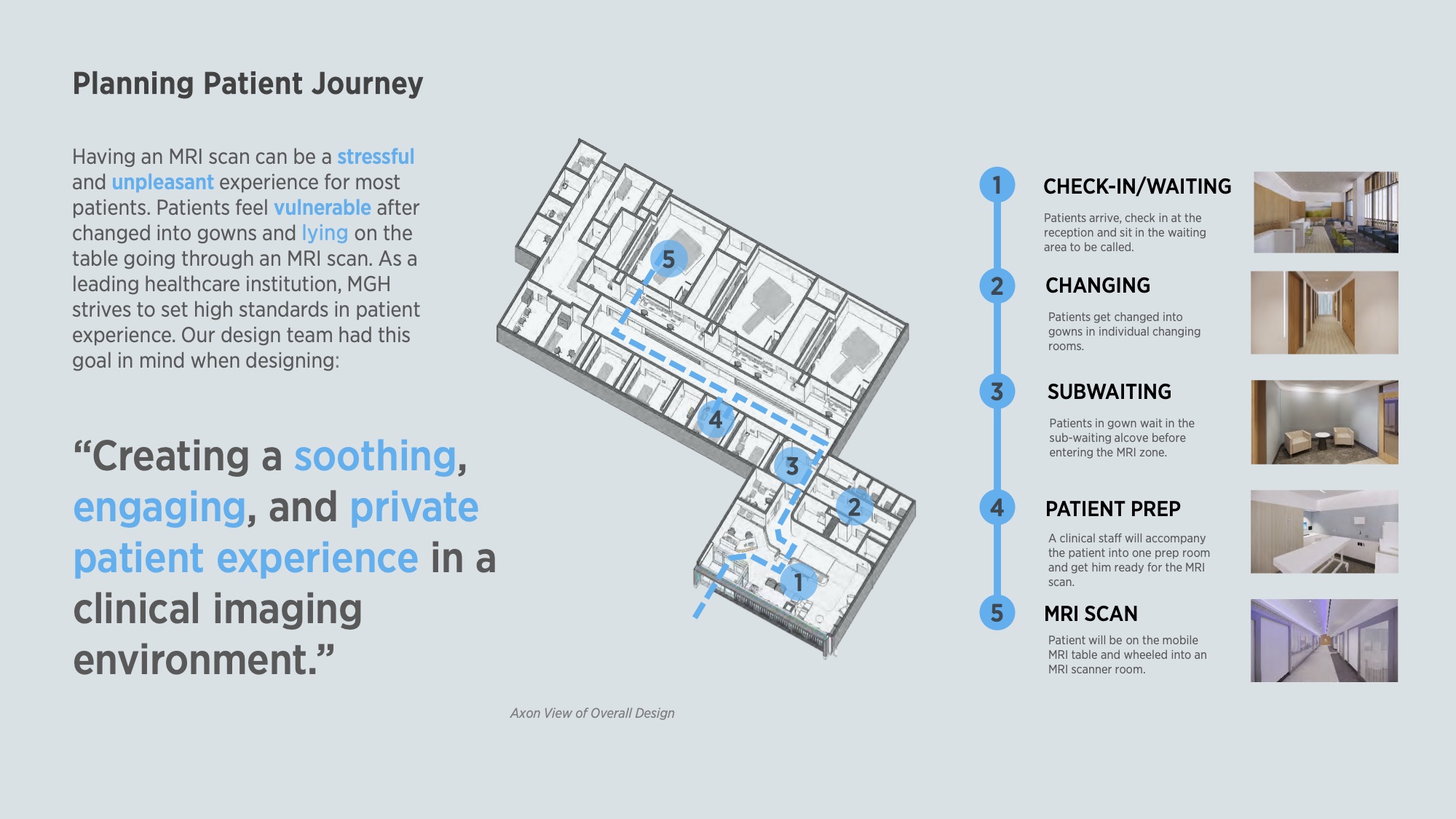
"Creating a soothing, engaging, and private patient experience in an MRI imaging clinic."
01 Process
Outlining the Design Principles
Following the MGH radiology guidelines, our design strives to
“provide a sense of hominess and comfort in private areas and
creating assurance and calmness in diagnostic or clinical areas”.
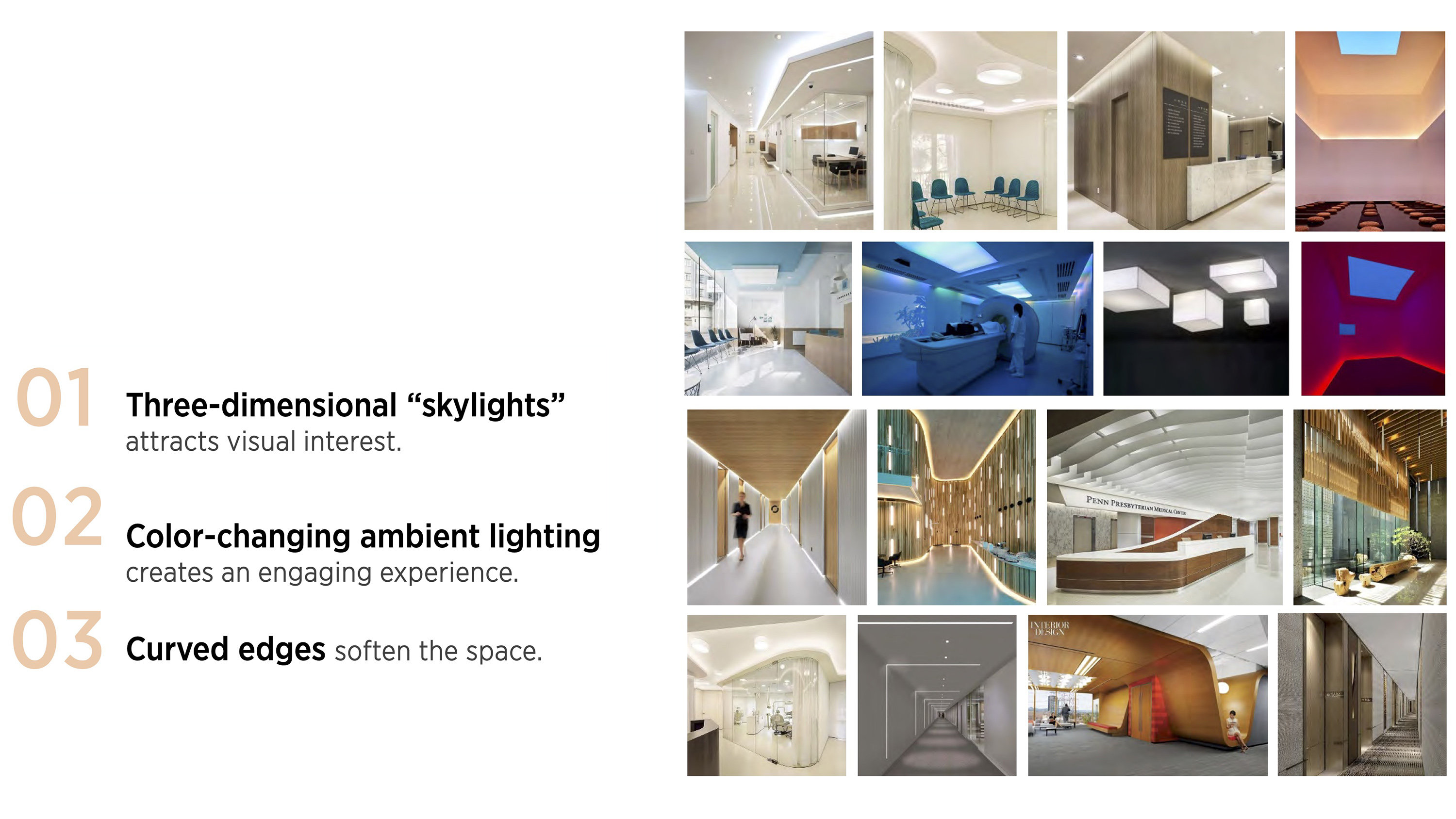
Using architectural design features, we want to focus on the
ceiling design because the patients are mostly on their back
from preparation to MRI.
We worked with consultants and engineers to develop a holistic
lighting experience. We researched on the compatible media display
devices and materials to make sure that the design meets clinical
standards and MRI safe. For this project, we introduced a new fabric
material to create ambient lighting.
02 Design
Collecting Feedback Through Evaluation
We carried out a two-month evaluation process, during which we conducted open house tours, dedicated user group workshop, design meetings and collected feedback via questionnaires and sticky notes. We received 30 survey responses and more than 100 sticker note comments. Feedback analysis let us change several design features and enabled us to attain variance from the MAAB.
03 Iterate
Analyzing feedback and Re-iterate
We carried out a two-month evaluation process, during which we conducted open house tours, dedicated user group workshop, design meetings and collected feedback via questionnaires and sticky notes. We received 30 survey responses and more than 100 sticker note comments.
Feedback analysis let us change several design features and enabled us to attain variance from the MAAB.